| Eighty seven years ago today 10:59 - Sep 3 with 1824 views | Churchman |
Britain declared war on Germany following their invasion of Poland on 1st September 1939. A transcript of his radio speech is here.
https://avalon.law.yale.edu/ww
You can see the shattering disappointment in his words.
Strange man, Chamberlain. He was not really like the Victorian undertaker image he portrayed. Nor was he weak. He ruled the Tory party with a rod of iron. More so than Thatcher ever did. He had a wide range of interests from nature to Beethoven and the Bard and was devoted to his family.
Chamberlain was also saw it as his duty to avoid the horrors of the Great War at almost any price. He was a great social reformer and found it distasteful to spend money on defence when there was so much poverty to be alleviated. But of course the Dictators forced his hand. Too late in many ways.
But Chamberlain was not alone in appeasement. It was a nearly universal view. Nobody wanted to see what was in front of them. And so 87 years ago almost to the minute it began.
The first thing that happened in Ipswich was the sirens went off. My grandparents after waiting a little while went round to my grandmothers parents house in Weymouth Rd.
They and her two sisters were sitting there shaking wearing gas masks. My grandmother said ‘don’t be so silly!’ and went for the sherry bottle to the muffled angst of her father who was as mean as hell. My dad and his brother thought the whole thing the greatest adventure ever. Well, as young teenagers, you would wouldn’t you.
This is a lesson from the past. I see it happening now. Denial. A pacifist Prime Minister and government for whom defence of this country could not be any lower on the priority list. Talk of upping spending, but in reality defence cuts. Promise a percentage increase, lump in a load of other commitments. Smoke and mirrors, bury the truth.
Other priorities. A Chancellor who as defence minister resigned because Starmer refused to meet defence commitments - and then did precisely the same thing.
Oh well, it is what it is. About 55 million died in WW2. I wonder if it’d have been different had Britain and France had seen what was happening sooner? [Post edited 3 Sep 11:02]
|  | | |  |
| Eighty seven years ago today on 19:31 - Sep 3 | WeWereZombies |
| Eighty seven years ago today on 18:06 - Sep 3 by Churchman |
Only nine divisions were used to capture Norway. About 140 were deployed in France and the Low Countries by comparison. It was vital they did. From there they could both threaten the British and more importantly keep Sweden in line for that vital iron ore.
Militarily the cost to Germany was negligible from the army viewpoint. However much of its very small navy was wiped out and this would have huge consequences later for the somewhat fanciful plans for Sealion - the invasion of Britain.
The other consequence for Germany was the 100k soldiers it needed to garrison the country. In return? Not much. Even Tirpitz was destroyed there.
The Altmark incident is interesting. Hitler used it as an excuse. Britain saw it as an opportunity to kick Germany, release 299 prisoners and to confirm to Norway that they had no power, no say. |
There's a chunk of the (destroyed) hull of the Tirpitz in the museum at Narvik, substantial doesn't really describe it. No guard rail or other protection around it, you can lean down and touch it. No one is going to put that in their pocket and take it away. | 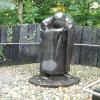 |
| |
| Eighty seven years ago today (n/t) on 22:23 - Sep 3 | mellowblue |
| Eighty seven years ago today (n/t) on 17:37 - Sep 3 by WeWereZombies |
But the prisoners were taken in the South Atlantic after their vessels were sunk by the Graf Spee. Whilst it would have been nigh on impossible for the Altmark to negotiate the Channel it was not that much easier to skirt the Norwegian coast given our naval superiority in the North Sea and thus the entry to the Baltic, it would have been easier to proceed further north and land the prisoners at the secret Nazi port in the Soviet Union, albeit that may have required a delay until later in the year. Also, I don't think the primary purpose of liberating prisoners of war is to give the press a feel good story and we were not into the 'rainy day' feeling of the war quite yet anyway. Plus I suspect it was more a case of getting ready to aid Norway than testing their neutrality. |
technically they weren't p.o.ws as they were not combatants,.
The role as fuel supply tanker to German shipping would have been compromised in a detour to the Arctic circle, which as you say would have been icebound anyway. To head for Northern Germany via neutral water was a good scheme. The Altmark incident was controversial as it forced Norway to complain about it's neutrality being compromised by the British operation as it could have acted as a pretext for German invasion, it certainly put them in a weak position and did not put us in the Norwegian good books. There were plans to aid Norway with a friendly aid invasion such as Iceland had later, but Norway wanted strict neutrality at that point. It was planned to land forces if Germany were spooked into invading Norway, by an incident like the Altmark, on the assumption that Norway would want aid at that point. However unbeknown to the British the Germans already had fullscale plans to invade in place, insisted on by Admiral Raader and when they did invade, a British response was no longer practicable or possible. Raeder wanted to extend the axis coastline to prevent a WW1 style ring of steel naval blockade as well as protecting iron ore supply on which any future ship building would depend on.
After thought, I agree that a good feel story at that point of time was not a priority reason, but a morale boosting film based on the River Plate ending with the Altmark incident was immediately made and was popular at cinemas, so it was certainly exploited. |  | | |
| |

 By continuing to use the site, you agree to our use of cookies and to abide by our Terms and Conditions.


